This summer’s World Cup in North America will feel very different from the 1994 tournament, when Fifa risked going to a country where ‘soccer’ meant little to most people. It would never work… would it? Henry Beesley looks back.
Take yourself back to 1994. Friends, arguably the most popular TV show of all time, aired its first episode; OJ Simpson was charged with the murder of his ex-wife Nicole Brown-Simpson; and the Channel Tunnel opened, acting as a perfectly weighted through ball to allow a seamless passage between the UK and mainland Europe.
It was also the year the World Cup made its first foray outside the traditional ‘football–loving’ nations, landing in the USA.
It wasn’t supposed to feel like a proper World Cup. A tournament staged in a country where the sport went by another name, played in stadiums built for a different sport, in sweltering conditions that bordered on the absurd. It shouldn’t have worked. But somehow, it did.
Brazil, but not as we knew them
Every great tournament needs an iconic winner. And USA ’94 delivered –although not in the way we’d become accustomed to.
This wasn’t the free-flowing, samba stars wowing the world with their talent and trickery. This was Dunga’s Brazil: organised, clinical, disciplined… even businesslike? The winners scored just 11 goals across their seven games. But the strike partnership of Bebeto and Romário still provided just enough jogo bonito to keep the neutrals on the edge of their seats.
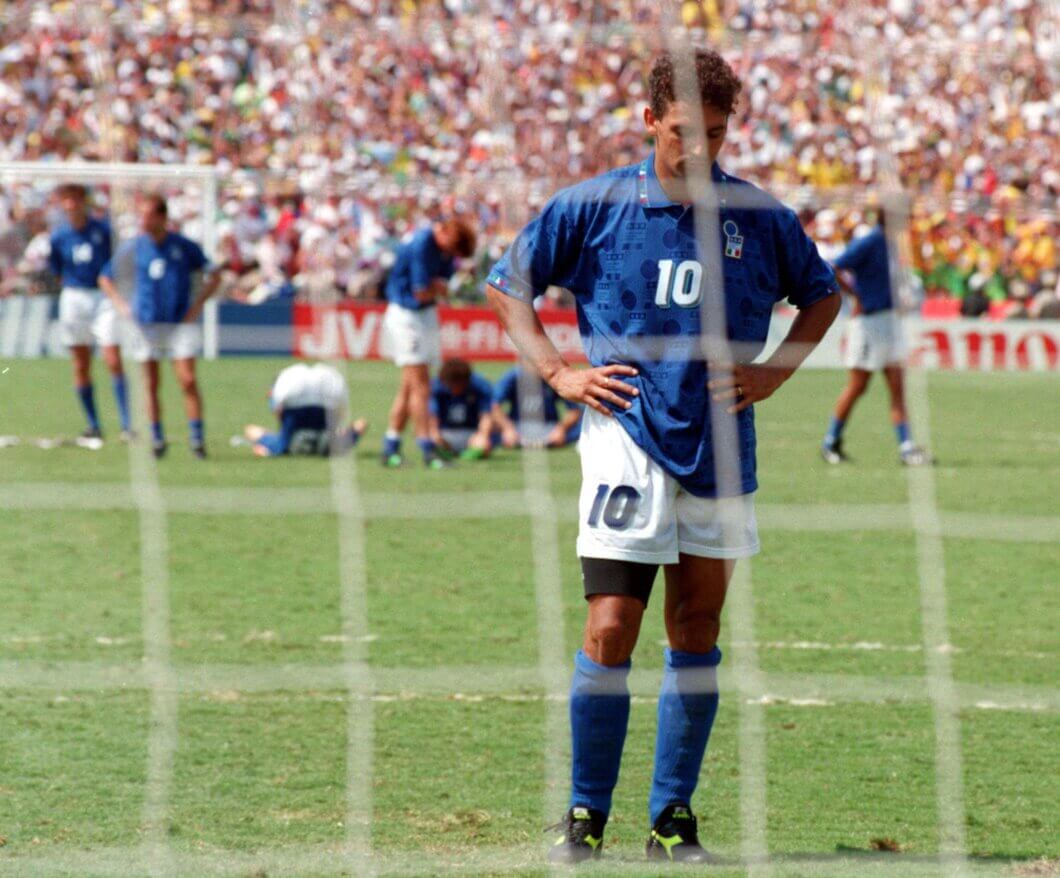
We expected the pragmatic approach from the Azzurri in the final. Like so many of the great Italian sides over the years, they were built on their rock-solid defence. But when Player of the Tournament Roberto Baggio skied his spot kick in the shootout, the World Cup ended as it has done more times than any other, with the men in those inimitable yellow jerseys hoisting the trophy.
Big stadiums, bigger temperatures
Subtlety wasn’t part of the brief when the World Cup came to America. USA ’94 was never going to be quaint or understated. Every stadium was either an NFL arena or a college football cathedral, boasting maximum capacities of more than 50,000. Almost 95,000 people flooded the Rose Bowl in Pasadena, California to see the Seleção win their fourth World Cup.
Soaring temperatures were another defining feature of the steamy summer. As games kicked off in the middle of the day to appease European broadcasters, the heat was relentless. Temperatures routinely surpassed 100°F/37ºC, turning the tournament into a test of stamina as much as skill. Brazil coach Carlos Alberto Parreira even said that to give 100 per cent in the conditions, “you’d have to be a robot”. Thankfully, his machine was in full working order.
New rules
In the world of video assistant referee (VAR) and semi-automated offsides, it’s easy to forget just how different the beautiful game looked back in 1994. This was the first World Cup where the backpass rule existed, preventing the keepers from picking the ball up when passed to them by a teammate, instantly speeding the game up.
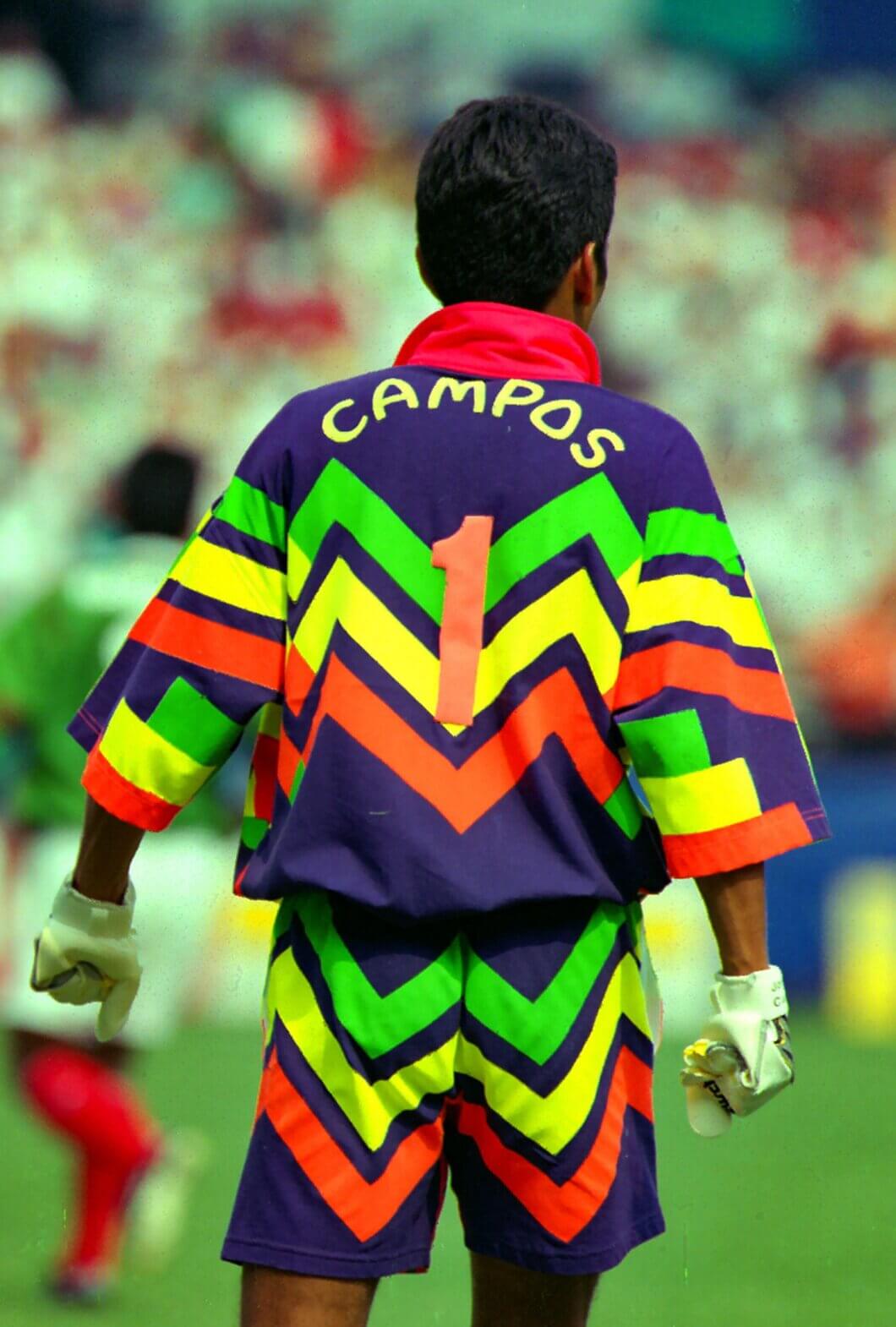
Modern football as we know it took another significant step forwards that summer. In a huge sigh of relief for fans and broadcasters around the world, this was the first tournament where players had their names printed on the back of their shirts, transforming the stars into global brands overnight.
Iconic kits
We’re all guilty of getting swept up in the nostalgia of yesteryear. It’s one of football’s favourite indulgences. Every Premier League club these days has a “throwback” collection. Shirts, tracksuits, boots… even the mullet is back in!And you won’t have to look too far to find a retro England shirt, possibly with “Gascoigne 8” on the back, in the pubs this summer.
But the ’94 World Cup is where it all started. The kits were some of the boldest ever made. Out with the heavy, simple cotton designs. Enter vibrant, baggy polyester, characterised by bright colours, bold patterns and prominent branding.
Keepers’ kits were composed of all sorts of insane colours and combinations that have been adopted and adapted over the years. And who could forget the host nation’s denim kit? The polarising strip carried the USA to the knockout stages, where they were eliminated by the eventual winners.
While we won’t be seeing any denim this summer, many of the experimental and outlandish templates have stood the test of time.
The darkest chapter
Not everything about USA ’94 was sunlit and celebratory, however. Colombia’s appearance was already marred by controversy before a ball was even kicked, with whispers of cartel control behind the scenes, betting on games and influence over team selections.
But what followed was far worse. After scoring an own goal against the hosts in the group stages, Andrés Escobar became the focal point of national anger. Days after returning home, he was murdered outside a nightclub in Medellín. It remains one of the saddest moments in World Cup history.
How will 1994 be remembered?
The slogan for USA 1994 was “Making Soccer History”. The marketing department didn’t oversell it. The overall attendance of almost 3.5 million and average of 69,000 are records yet to be broken.
Of course, the financial implications were huge. Lucrative sponsorship deals were secured, many of which still stand today.
But the greatest success of the tournament was how football embedded itself into the American culture. It provided the foundation for the formation of the MLS, where Lionel Messi now lights up the league.
It also helped fuel the rise of the US women’s national side, a dynasty that dominated the global game for almost 20 years.
The beautiful game will never be known as football in the States. But in 1994, a little like a Roberto Carlos pile–driver, soccer blasted itself into the top corner of the minds of the American public.
So, what next?
After 32 years, the circus returns. Louder, bigger, brighter, and this time with hosting responsibilities shared with Canada and Mexico. But with 11 of the 16 host stadiums in the States, there’s no doubt who the main character is this summer.
With all the excess and bravado, it isn’t about whether the tournament will be a spectacle. That much is guaranteed. The question is what, exactly, will this summer leave behind. Because if 1994 taught us anything, it’s that the real story only begins once the final whistle blows.
Henry Beesley is Editor of the Fitzdares Times.